
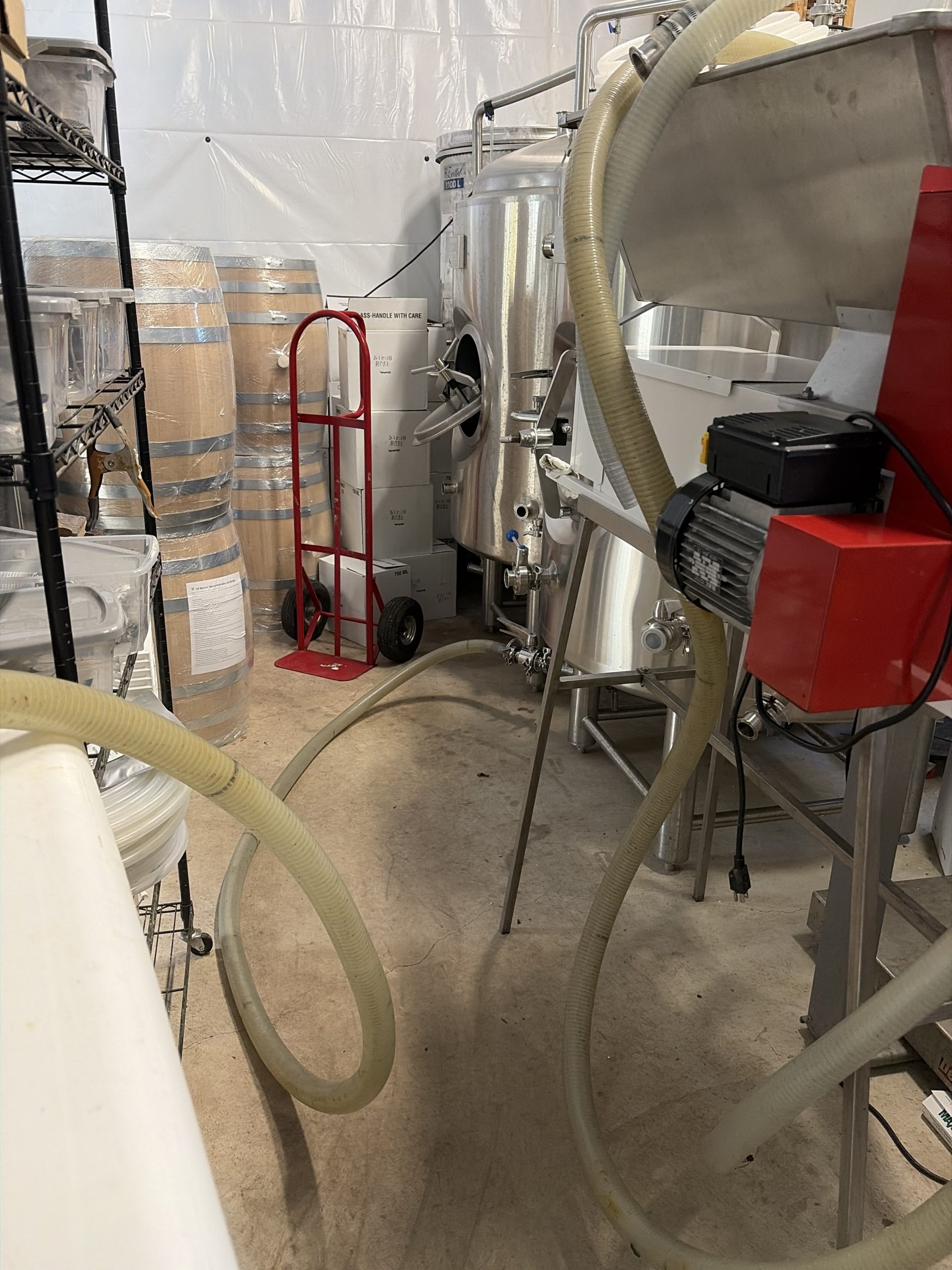
Every vintage tells a different story. Our 2026 Cabernet Franc is already proving that no two growing seasons—or wines—are quite alike.
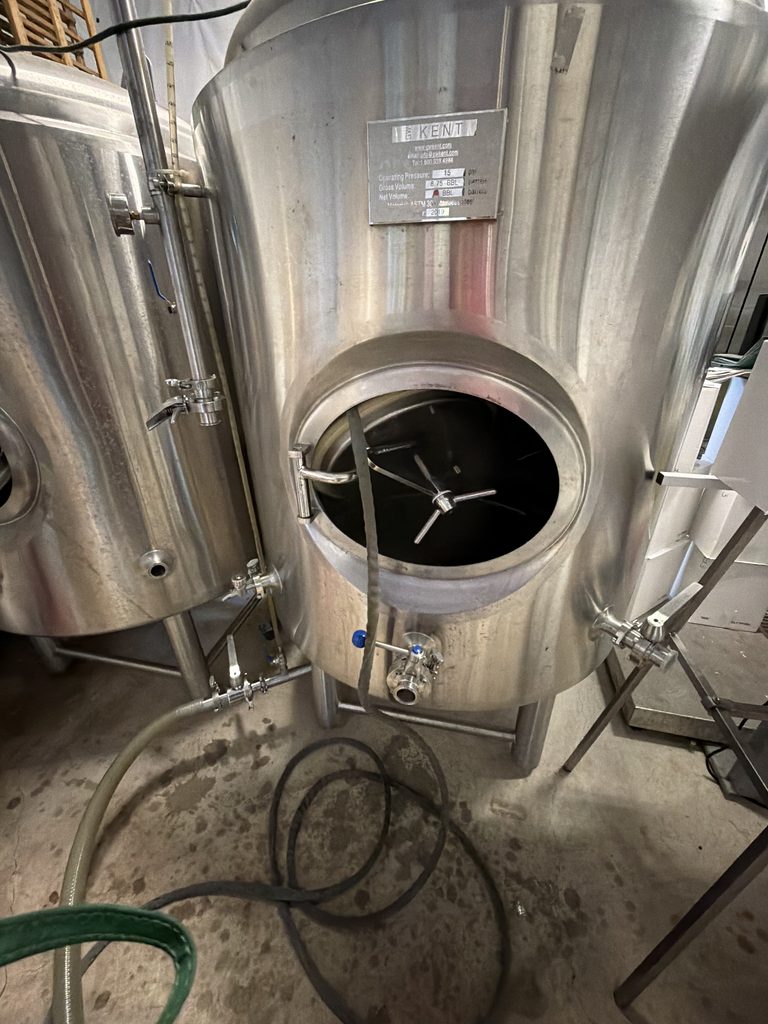
The 2026 Cabernet Franc has completed its primary alcoholic fermentation and is now resting in a stainless steel tank, undergoing malolactic fermentation. This is an important transitional stage in the winemaking process, when naturally sharper malic acid is converted into softer lactic acid, helping round out the wine’s texture and develop its character.
A Different Harvest, A Different Wine
This year’s Cabernet Franc has presented us with some interesting decisions. Unlike our 2025 Cabernet Franc, which arrived with higher sugar levels and the potential for a fuller-bodied, higher-alcohol wine, the 2026 grapes were harvested earlier, at a lower Brix (the measure of sugar concentration in grape juice). This decision was made for us by weather and other factors.
Lower sugar at harvest generally translates into lower alcohol after fermentation, and that is precisely what we are seeing with this vintage. But alcohol is only one part of a wine’s personality. Acidity, tannin structure, fruit character, and the balance among these elements all contribute to the finished wine. An earlier harvest can sometimes produce a Cabernet Franc with brighter acidity, fresher fruit characteristics, and a lighter body. Whether those qualities will define our 2026 vintage remains to be seen.
And that uncertainty is part of what makes winemaking so fascinating and fun. For boutique wineries, the aim is not to re-make last-year’s wine, but to surprise ourselves and our customers with wines that have different personalities each year. That’s why you should visit Todhunter Vineyards every year — you’ll never taste the same thing twice!
What’s Happening in the Cellar?
Right now, our attention is focused on completing malolactic fermentation and monitoring the wine’s development. Once that process is complete, we’ll transfer the Cabernet Franc into oak barrels for maturation. Oak aging will give the wine time to evolve, allowing its flavors and tannins to integrate while adding subtle complexity. We’ll continue evaluating the wine over the coming months, watching how its structure, aroma, and overall balance develop.
One Vintage, Two Possible Futures
We’re deliberately keeping our options open. Our 2026 Cabernet Franc may ultimately follow one of two paths:
A 2027 varietal release. If the wine develops the balance, character, and complexity we’re looking for, we may bottle it next year as a standalone Cabernet Franc, offering an interesting contrast to our 2025 vintage.
A place in our cellar library. Alternatively, we may reserve the wine for future blending. A Cabernet Franc with bright acidity and fresh fruit character can become an especially valuable blending component, adding dimension and balance to wines produced in subsequent vintages.
Neither outcome would represent a disappointment. Both are legitimate expressions of thoughtful winemaking. At Todhunter Vineyards, our goal is not to force every vintage into the same mold. We want each wine to reflect the conditions of its growing season and the decisions that bring out its best qualities.
Patience Is Part of the Process
One of the lessons of winemaking is that wines don’t always reveal their full potential on our preferred schedule. For now, our 2026 Cabernet Franc is quietly changing in stainless steel, preparing for the next chapter of its journey in oak. We’ll share more as the wine develops, including updates on barrel aging and, eventually, our decision about its future. Whatever direction it takes, we’re looking forward to discovering what the 2026 vintage has to offer.
From our cellar in Pennsylvania’s Laurel Highlands, cheers to the possibilities of a new vintage!
Todhunter Vineyards™ & Winery
Laurel Highlands, Pennsylvania




No responses yet